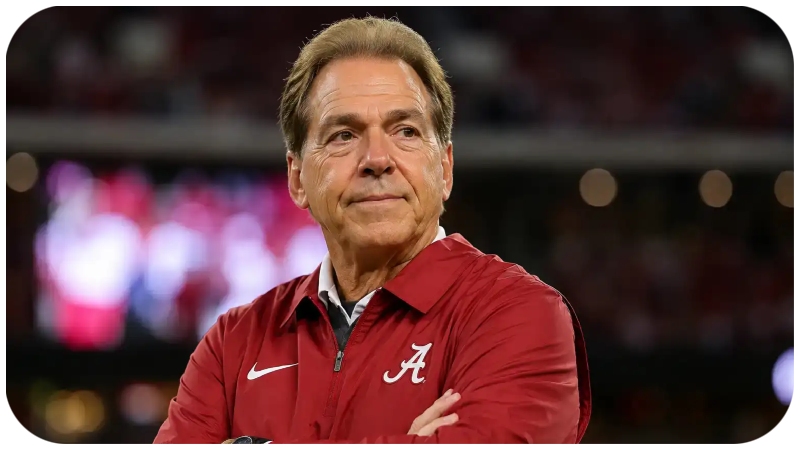
Nick Saban is widely regarded as one of the greatest college football coaches in history. Throughout a coaching career spanning more than four decades, he transformed struggling programmes into national champions, built one of the most successful dynasties in American sport, and became one of the highest-paid coaches in college athletics. As a result, interest in Nick Saban’s net worth continues to grow among football fans, sports analysts, and those fascinated by leadership and business success.
As of 2025, Nick Saban’s estimated net worth is approximately $80 million, accumulated through coaching salaries, performance bonuses, endorsement deals, media work, speaking engagements, and strategic investments. However, his financial success tells only part of the story. His disciplined leadership, relentless pursuit of excellence, and famous “Process” philosophy have influenced athletes, coaches, executives, and business leaders worldwide.
This comprehensive biography explores Nick Saban’s early life, education, coaching journey, personal life, wealth, achievements, and the remarkable legacy he continues to build.
Early Life and Family Background
Nicholas Lou Saban Jr. was born on 31 October 1951 in Fairmont, West Virginia, United States. He grew up in the nearby town of Monongah, where his family operated a local service station.
His father, Nick Saban Sr., owned the family business and became one of the strongest influences on his life. Through years of helping at the service station, young Nick learned the importance of discipline, responsibility, punctuality, and attention to detail. His mother, Mary Saban, provided constant encouragement and emphasised the value of education.
Growing up in a hardworking family shaped Saban’s mindset. Rather than relying on natural talent alone, he developed a belief that consistent effort eventually produces extraordinary results—a philosophy that later defined his coaching career.
During his school years, Saban excelled academically and athletically. Football quickly became his greatest passion, although he also participated in other sports.
Education
nick-saban-net-worth attended Kent State University in Ohio, where he played as a defensive back for the Kent State Golden Flashes football team.
One of his teammates was future NFL coaching legend Jack Lambert, who later became a Hall of Fame linebacker for the Pittsburgh Steelers.
Saban earned a Bachelor of Science degree in Business in 1973 before completing a Master’s degree in Sports Administration in 1975.
His academic background helped him understand organisational management, leadership, and administration—skills that proved invaluable throughout his coaching career.
Career Beginnings
After finishing university, Saban entered coaching as a graduate assistant at Kent State.
Like many successful coaches, he worked his way through numerous assistant positions, including roles at:
- Kent State
- Syracuse University
- West Virginia University
- Ohio State University
- Navy
- Michigan State University
These early coaching years allowed him to learn from respected mentors while developing his own defensive philosophy.
Perhaps the biggest influence came from legendary coach Bill Belichick, with whom Saban later worked in the NFL. Their friendship became one of football’s most respected professional relationships.
Becoming a Head Coach
nick-saban-net-worth received his first major opportunity as head coach at the University of Toledo in 1990.
Although he coached only one season, he guided Toledo to a 9–2 record, immediately attracting attention from larger programmes.
In 1991, he accepted the head coaching position at Michigan State University.
While rebuilding Michigan State proved challenging, Saban gradually improved the programme. By the late 1990s, his teams were consistently competitive against the strongest opponents in the Big Ten Conference.
His success eventually led to one of the biggest opportunities in college football.
LSU and the First National Championship
In 2000, Nick Saban became head coach of Louisiana State University (LSU).
The programme had struggled for consistency before his arrival, but Saban quickly changed its culture.
His emphasis on discipline, recruiting, player development, and defensive excellence transformed LSU into a national powerhouse.
The breakthrough came in 2003, when LSU defeated Oklahoma to win the BCS National Championship.
The title established Saban as one of the premier coaches in college football.
His success also attracted interest from the National Football League.
NFL Career with the Miami Dolphins
In 2005, Saban became head coach of the Miami Dolphins.
Many expected him to dominate professional football just as he had in college.
However, the NFL presented different challenges.
During two seasons with Miami, the Dolphins recorded respectable but unspectacular results, finishing with records of 9–7 and 6–10.
Although Saban later admitted that his NFL experience taught him valuable lessons, he ultimately decided that college football better suited his coaching style.
In 2007, he returned to the college game.
Building the Alabama Dynasty
nick-saban-net-worth accepted the head coaching position at the University of Alabama in January 2007.
Few people realised they were witnessing the beginning of one of the greatest dynasties in sporting history.
Within only two years, Alabama became a national contender.
The Crimson Tide won national championships in:
- 2009
- 2011
- 2012
- 2015
- 2017
- 2020
Combined with his LSU title, Saban won seven national championships as a head coach—the most in the modern era of major college football.
His Alabama teams consistently dominated recruiting rankings, produced elite NFL talent, and maintained extraordinary consistency.
Between 2008 and 2023, Alabama became the benchmark for excellence in college football.
The Process: Saban’s Leadership Philosophy
One reason behind Saban’s remarkable success was his famous philosophy known simply as “The Process.”
Rather than focusing on winning championships, he encouraged players to concentrate entirely on the next task.
This mindset included:
- Daily improvement
- Personal accountability
- Mental discipline
- Consistent preparation
- Attention to detail
The Process became popular far beyond football.
Business executives, military leaders, educators, and motivational speakers have referenced Saban’s approach as an example of sustainable high performance.
Retirement from Coaching
On 10 January 2024, Nick Saban announced his retirement after an extraordinary coaching career.
He finished with:
- More than 290 career victories
- Seven national championships
- Numerous conference titles
- Hundreds of players were drafted into the NFL
Following retirement, Saban joined sports broadcasting, quickly becoming a respected college football analyst thanks to his deep understanding of the game.
Major Achievements and Awards
Nick Saban’s list of achievements is among the greatest in coaching history.
His honours include:
- Seven National Championships
- Multiple SEC Championships
- AP College Football Coach of the Year
- Walter Camp Coach of the Year
- Paul “Bear” Bryant Coach of the Year Awards
- Eddie Robinson Coach of the Year Awards
- Induction into several sports halls of fame
He also coached dozens of future NFL stars, including Heisman Trophy winners, All-Americans, and first-round draft selections.
Personal Life
Nick Saban married Terry Constable, commonly known as Miss Terry, in 1971.
Their marriage has become one of college football’s most admired partnerships.
Miss Terry frequently supported charitable initiatives, community outreach, and university events throughout Saban’s coaching career.
The couple has two adopted children, Nicholas and Kristen.
Away from football, Saban enjoys spending time with family, golfing, and supporting educational and charitable causes.
Nick Saban Net Worth
As of 2025, Nick Saban’s estimated net worth is around $80 million.
His wealth comes from several income sources rather than coaching salary alone.
Coaching Salaries
For many years, Saban ranked among the highest-paid coaches in American sport.
During his final seasons at Alabama, his annual compensation exceeded $11 million, including:
- Base salary
- Talent fees
- Retention bonuses
- Performance incentives
- Media obligations
Over his coaching career, he earned well over $150 million in salary and bonuses.
Endorsements
Saban has partnered with several well-known companies through advertising campaigns and sponsorship agreements.
These endorsements have generated millions of pounds worth of additional income over the years.
Television and Media
Following retirement, Saban joined major sports television coverage as an analyst.
Broadcasting contracts continue to provide another significant revenue stream while keeping him closely connected to college football.
Real Estate and Investments
Nick Saban has invested in valuable residential properties throughout his career.
He has also maintained a diversified investment portfolio, contributing further to his long-term financial security.
Interesting Facts About Nick Saban
- He began working in his father’s service station as a child.
- His birthday is 31 October (Halloween).
- He won national championships at two different universities.
- He is close friends with NFL coaching legend Bill Belichick.
- His coaching philosophy, “The Process,” has influenced businesses as well as sports teams.
- Numerous former assistants have become successful head coaches themselves.
- He remains one of the most respected voices in American football after retirement.
Legacy and Influence
nick-saban-net-worth impact extends far beyond championships.
He fundamentally changed modern college football through innovative recruiting, elite player development, sports science, organisational management, and leadership culture.
His programmes consistently produced NFL-ready athletes while maintaining exceptionally high performance standards.
Many coaches across college football have adopted elements of Saban’s systems, creating what many analysts call the “Saban coaching tree.”
Beyond football, executives frequently study his leadership principles because they demonstrate how sustainable excellence comes from disciplined daily habits rather than short-term motivation.
Even after retirement, his influence continues through television analysis, mentoring younger coaches, and the countless professionals inspired by his methods.
Conclusion
Nick Saban’s journey from a small-town West Virginia upbringing to becoming the most accomplished coach in modern college football represents an extraordinary story of discipline, vision, and relentless commitment. While Nick Saban’s net worth, estimated at approximately $80 million, reflects decades of professional success, his true legacy lies in the standards he established for leadership and excellence.
Across more than forty years in coaching, Saban built championship-winning teams, developed future NFL stars, mentored generations of coaches, and reshaped the landscape of college football. His emphasis on preparation, accountability, and continuous improvement transformed not only the programmes he led but also the broader understanding of what sustained success requires.
Today, Nick Saban remains an iconic figure whose influence reaches well beyond the football field. Whether admired for his record-breaking achievements, respected for his leadership philosophy, or recognised for his enduring impact on American sport, his legacy is certain to inspire future generations for many years to come.
For more information, visit our site daily.