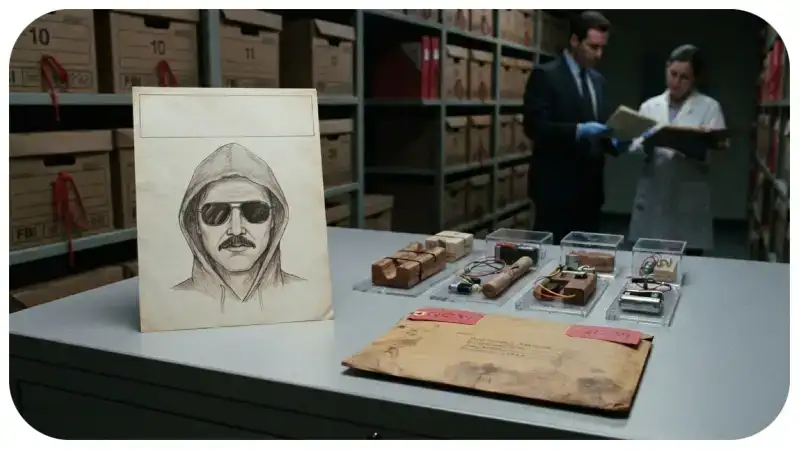
For nearly two decades, a quiet terror gripped the United States. Silent parcels delivered through the mail targeted universities, airlines, and research facilities. Behind these attacks was Theodore Kaczynski, a former mathematics professor known historically as the Unabomber. The manhunt to stop the Unabomber remains one of the longest and most complex criminal investigations in FBI history.
Understanding this dark chapter requires looking beyond basic headlines. This guide examines the origins of the bombing campaign, the investigative efforts, the psychological profile, the release of the manifesto, and the lasting impact of the case.
The Origins of the Terror Campaign (1978–1995)
Between 1978 and 1995, the Unabomber mailed or delivered 16 explosive devices. These targeted attacks claimed three lives and injured 23 other people.
The FBI established a dedicated task force. They labeled the suspect “UNABOM” because his early targets involved universities and airlines. Unlike typical criminals motivated by personal gain, this suspect targeted individuals with no personal connection to him. His attacks struck directly at modern industrial society.
Primary Targets and Methods
-
Universities: Computer science and engineering departments were frequent destinations for parcels.
-
Airlines: An early device detonated in a cargo hold, narrowly avoiding a mid-air disaster.
-
Corporate Executives: Business leaders in technology and research received deadly packages.
The bombs revealed a chilling level of craftsmanship. The perpetrator hand-carved intricate wooden components inside the packages. This obsessive attention to detail hinted at a solitary individual with vast amounts of isolated time.
The Manhunt and the Investigation
As years passed without a clear suspect, public anxiety mounted. The task force grew to include hundreds of special agents and forensic experts. Despite analyzing thousands of tips, authorities lacked a real name or accurate physical description.
Then, a dramatic shift occurred in 1995. The killer contacted media outlets and promised to halt his bombing campaign if a lengthy essay was published in full.
The Turning Point: Publishing the Manifesto
Faced with a difficult dilemma, federal authorities and major publishers agreed to print the 35,000-word manuscript titled Industrial Society and Its Future. They hoped releasing the text might prompt someone to recognize the distinct writing style.
The gamble paid off. The publication reached millions of readers, setting the stage for an unexpected familial breakthrough.
The Ideology and the Arrest
The manifesto argued that modern technology destroys human freedom and inflicts psychological damage. While the Unabomber critiqued industrial civilization, his specific phrasing and linguistic patterns proved to be his downfall.
Family Detection and Capture
David Kaczynski read the manifesto and noticed striking similarities to letters from his estranged brother, Theodore Kaczynski. Deeply troubled, David shared his suspicions with legal counsel and provided authentic writing samples to authorities.
FBI linguists compared the texts and confirmed an undeniable match. In April 1996, federal agents raided a remote cabin in Lincoln, Montana, and arrested Theodore Kaczynski. Inside the shelter, agents recovered active bomb-making components and a fully assembled explosive device.
Trial and Imprisonment
Faced with overwhelming evidence, Kaczynski accepted a plea agreement in 1998. He received a sentence of life imprisonment without parole and spent decades at a federal supermax prison in Colorado before passing away in 2023.
Impact on Law Enforcement and Society
The legacy of the Unabomber extends far beyond the courtroom battles. The case transformed how federal agencies handle domestic terrorism, forensic linguistics, and behavioral analysis.
Advancements in Forensic Linguistics
Before this case, linguistic analysis was rarely used as primary evidence in major trials. Matching the manifesto to personal letters proved that an individual’s writing style serves as a unique psychological fingerprint. Today, forensic linguistics is a vital investigative tool.
Changes to Mail Security
The bombings reshaped how citizens view mail security. Increased screening protocols and advanced X-ray technology at postal facilities became standard operating procedures across the globe following the terror campaign.
Conclusion
The Unabomber case remains a haunting reminder of technological anxiety and extreme isolation. What began as an anonymous terror campaign unraveled through forensic linguistics, familial courage, and the killer’s own compulsion to share his philosophy. Today, the case stands as a foundational milestone in modern criminal profiling and domestic security.