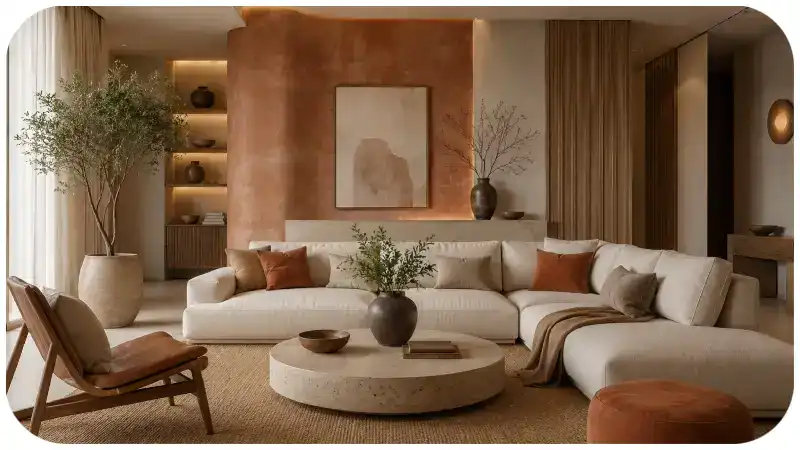
Interior design in 2026 is no longer just about aesthetics—it’s about how a space makes you feel, function, and evolve with your lifestyle. Homeowners and designers are moving away from purely decorative trends and shifting toward meaningful, sustainable, and technology-enhanced interiors.
According to leading design forecasts, 2026 is defined by a powerful combination of warm minimalism, natural materials, smart living systems, and expressive individuality. Instead of chasing fleeting styles, people now prefer interiors that feel personal, timeless, and emotionally connected.
Let’s explore the most important interior design trends 2026 shaping modern homes across the world.
1. The Rise of Warm Minimalism Over Cold Simplicity
For years, minimalism meant white walls, gray tones, and empty spaces. But in 2026, that approach feels outdated.
A new style called warm minimalism is taking over—combining simplicity with comfort and personality.
Instead of sterile environments, designers now focus on:
- Soft beige, sand, terracotta, and earthy tones
- Natural fabrics like linen and cotton
- Layered textures that add depth
- Comfortable, lived-in furniture
Recent industry insights show that homeowners increasingly want interiors that feel “livable, not like showrooms”—a shift highlighted in multiple 2026 design reports from global platforms like Vogue and Forbes .
Real-world example:
A living room in this style may feature a linen sofa, clay-colored walls, woven rugs, and soft lighting instead of bright overhead LEDs.
2. Nature-Inspired Materials Take Center Stage
One of the strongest interior design trends 2026 is the return of natural, tactile materials.
Designers are moving away from artificial finishes and embracing:
- Wood (especially walnut, oak, and reclaimed timber)
- Natural stone like marble and limestone
- Handmade ceramics and tiles
- Rattan, bamboo, and woven textures
This trend reflects a broader cultural shift toward sustainability and authenticity. Homes now aim to feel grounded and connected to nature rather than overly digital or synthetic.
Why it matters:
Natural materials age beautifully, making interiors more timeless and environmentally responsible.
3. Color Trends: Bold, Emotional, and Expressive
Color in 2026 is no longer neutral and safe—it’s expressive and bold.
Design experts highlight a move toward:
- Deep greens and olive tones
- Burgundy and wine-inspired shades
- Chartreuse accents for energy
- Earthy neutrals mixed with vibrant contrast
One of the standout combinations of 2026 is chartreuse and burgundy, used to create striking yet balanced interiors.
Practical application:
- Use bold colors in cushions, rugs, or accent walls
- Keep base tones neutral to avoid visual overload
- Mix warm and cool tones for balance
4. Smart Homes and Invisible Technology
Technology is becoming an invisible but essential part of interior design.
Instead of visible gadgets, 2026 focuses on “invisible tech integration”, such as:
- Smart lighting systems that adjust automatically
- Hidden speakers and entertainment systems
- Voice-controlled climate and blinds
- Seamless kitchen appliances
The goal is simple: technology should enhance comfort without disrupting design harmony.
For example, a modern kitchen may include built-in smart ovens and touchless faucets that blend into cabinetry without visual clutter.
5. Curves vs Structure: Finding the Balance
Curved furniture continues to evolve in 2026—but with moderation.
While curved sofas and organic shapes remain popular, designers now prefer a balanced mix of curves and straight lines.
Why the shift?
- Overuse of curves can feel repetitive
- Structured elements add stability and contrast
- Mixed shapes create visual interest
Example:
A curved sofa paired with a rectangular coffee table creates harmony between softness and structure.
Recent design discussions confirm that curves are still relevant but are no longer the dominant trend—they’re now part of a more balanced design language .
6. Personalized and Story-Driven Interiors
In 2026, personalization is everything.
Instead of copying Pinterest trends, homeowners are choosing designs that reflect their identity and life story.
Key elements include:
- Vintage and heirloom furniture
- Handmade decor pieces
- Travel-inspired accessories
- Custom artwork and wall murals
This shift reflects a rejection of “disposable decor” in favor of meaningful, long-lasting pieces.
Real-world insight:
Designers now prioritize emotional connection over perfection. A slightly imperfect, lived-in space is considered more valuable than a flawless showroom look.
7. Multifunctional Spaces for Modern Living
Homes are becoming more flexible than ever.
Due to hybrid work and lifestyle changes, rooms now serve multiple purposes:
- Living rooms double as workspaces
- Bedrooms include meditation corners
- Kitchens become social hubs
To support this, designers use:
- Modular furniture
- Foldable desks
- Hidden storage systems
- Sliding partitions
This trend focuses on efficiency without sacrificing beauty.
8. Sustainability Becomes a Core Design Principle
Sustainability is no longer optional—it is a core design value.
In 2026, homeowners prefer:
- Locally sourced materials
- Eco-friendly paints and finishes
- Recycled wood and metal
- Energy-efficient lighting systems
Sustainable design also includes buying fewer but higher-quality items that last longer.
This “buy once, keep forever” mindset is reshaping how people decorate their homes.
9. Texture Over Flat Design
Flat, overly polished surfaces are fading out.
Instead, designers are embracing:
- Plaster walls
- Textured stone
- Fabric wall panels
- Layered rugs and textiles
Texture adds depth and makes interiors feel more dynamic and warm.
Even walls are becoming artistic surfaces instead of plain backgrounds.
10. The Future of Interior Design: Emotion Over Perfection
The biggest takeaway from interior design trends 2026 is simple:
Homes are no longer designed just to impress—they are designed to feel good.
People want:
- Comfort over perfection
- Personality over uniformity
- Warmth over cold minimalism
- Functionality over decoration
This emotional shift is redefining how spaces are built, decorated, and experienced.
Conclusion
Interior design in 2026 represents a powerful transformation where innovation meets elegance. Technology is becoming invisible, materials are becoming more natural, and designs are becoming deeply personal.
Instead of following rigid rules, the future of interiors encourages creativity, sustainability, and emotional connection.
If one thing is clear, it’s this:
The best-designed homes in 2026 are not the most expensive—they are the most meaningful.
For more information, visit our site daily.